In Costa Rica, where service businesses, tourism operators, delivery teams and real estate agents spend hours moving between towns, a van or car can be one of the most visible advertising assets a business owns. A wrap turns daily driving into repeated exposure without paying for a fixed billboard.
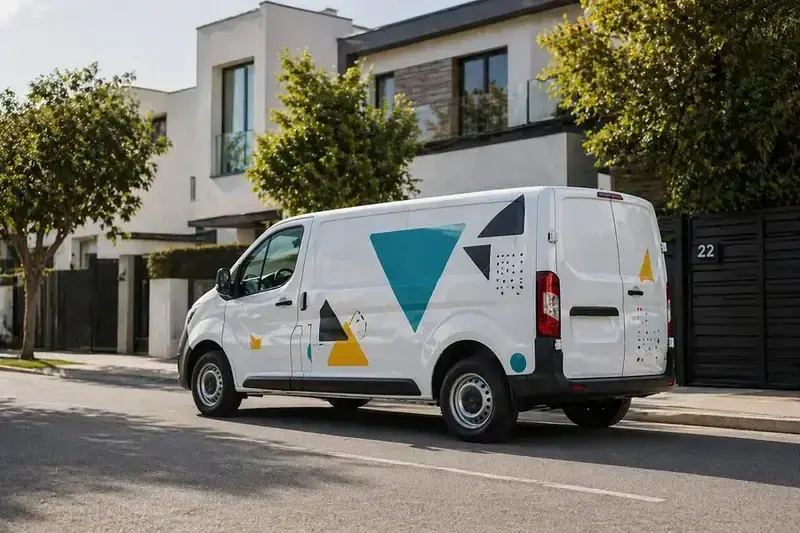
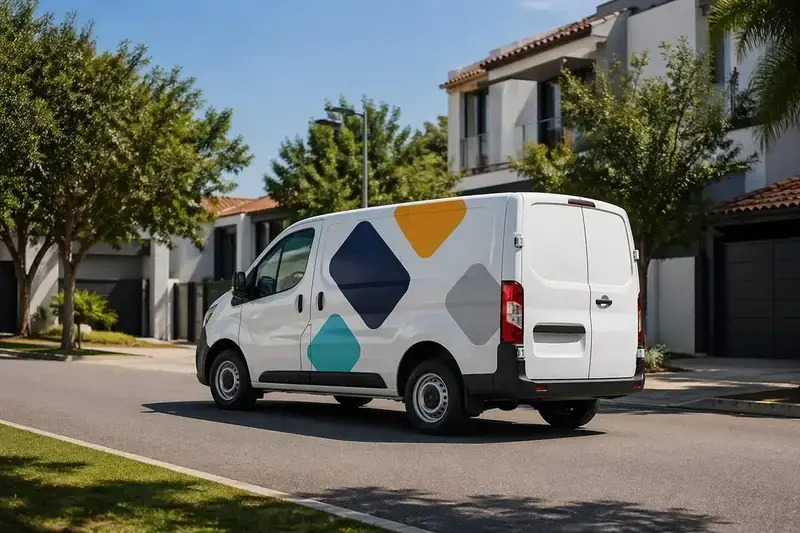
The difference between a strong vehicle wrap and a cheap-looking sticker is planning. The design has to work while the vehicle is moving, parked in direct sun, covered with road dust, or seen from a distance in a busy street. We design it as a sign that moves, not as a flat poster stretched across a car.
Full Wrap, Partial Wrap or Vehicle Decals?
A full wrap covers most of the vehicle’s visible painted panels. It is ideal when the vehicle itself should become a brand object: tourism vans, delivery fleets, promotional vehicles and businesses that want a bold street presence. The investment is higher.
A partial wrap uses selected sections of the vehicle, usually the sides, rear panels, hood or doors. It can combine printed graphics with the original vehicle color, which keeps the budget lower while still giving a professional result. For many local service businesses, a clean partial wrap with strong logo placement and contact information is the best buy.
Simple vehicle decals are best for essential identification: logo, phone number, website, QR code, license or service list. They do not change the whole vehicle, but they make it credible and easier to remember. If the budget is limited, decals are still far better than driving an unbranded vehicle.
Designing for Real Roads, Not for a Computer Screen
Vehicle graphics must be read quickly. A driver behind your van may have only three seconds to understand who you are and what you do. That means the hierarchy should be simple: logo first, service category second, phone or website third. Small text, crowded service lists and low-contrast colors usually disappear in real traffic.
The shape of the vehicle also matters. Door handles, fuel caps, sliding doors, windows, lights and panel curves can interrupt the design. A logo that looks perfect on a flat mockup may land across a handle or body groove when printed at real size. The layout starts from the real vehicle.
What Makes a Vehicle Wrap Last in Costa Rica?
Costa Rica is demanding on exterior graphics. Strong UV exposure, rain, humidity, road dust, heat and salt air near coastal areas all affect vinyl performance. Material and laminate matter, and so do preparation and maintenance. A wrap installed over wax, silicone, dirt or damaged paint will not perform like one applied to a properly cleaned surface.
For vehicles that work around Guanacaste, we normally think about sun orientation, washing habits and how often the vehicle is used. A tourism van parked outdoors all day needs a different expectation than a company car kept under shade.

The Most Important Areas on a Branded Vehicle
The sides create the biggest impression while the vehicle is parked or passing slowly. The rear is extremely valuable in traffic because people sit behind it and have time to read. The hood can be useful for high-angle visibility, but it is not usually the first priority for contact information. Windows can also be used with microperforated film when visibility from inside must remain possible.
Each area has its own job. The side should communicate the brand and service clearly. The rear should make contact easy. The front should support recognition without becoming crowded. So a wrap is designed panel by panel, not as one repeated graphic.
Common Mistakes That Make Vehicle Wraps Look Cheap
The most common mistake is adding too much information. A vehicle is not a brochure. It should not carry every service, every social media icon and every promotion at once. The second mistake is weak contrast: gray text on a dark car, thin letters on a busy photo, or a phone number that cannot be read from a normal driving distance.
Another mistake is ignoring the vehicle color. If the existing paint is strong, it can become part of the design instead of being covered. If the paint is old, scratched or mismatched, a full or larger partial wrap may be needed to create a professional appearance.
Who Benefits Most from Vehicle Branding?
Vehicle wraps work especially well for plumbers, electricians, construction teams, cleaning companies, real estate agents, delivery businesses, restaurants, hotels, tourism operators and maintenance services.
They also work well for fleets. When several vehicles share the same layout, the brand becomes familiar around town. In Liberia, Tamarindo, Playas del Coco and Nosara, people often call the business they remember seeing.
How to Prepare Before Requesting a Quote
Before requesting a quote, take clear photos of the vehicle from both sides, front, rear and three-quarter angles. Include the make, model and year if available. Note whether the paint is original, whether there are dents or peeling areas, and whether windows should be used for graphics. Also decide what the most important call to action should be: phone, WhatsApp, website or location.
With that information, SignWorks can recommend the right option: full wrap, partial wrap, decals or a staged approach that starts with essentials and can expand later.