A storefront that still looks sharp after five years in this climate is often aluminium composite. It is the least glamorous decision in a sign and decides most of the outcome.

Aluminium Composite Material — ACM, and Lokbond is the brand of it we work with most — is a sandwich: two thin sheets of pre-finished aluminium bonded to a solid polyethylene core. It is not a metal sheet and it is not a plastic sheet. It outperforms both, for structural reasons.
Why the Sandwich Works
A solid aluminium sheet stiff enough to span a shopfront would be heavy, expensive and awkward to lift. A plastic sheet light enough to handle would bow between its fixings on a hot afternoon. ACM gets stiffness from putting two thin skins as far apart as it can and filling the gap with something light — the same principle as a hollow-core door or an aircraft floor.
What the aluminium adds on top of that is a complete barrier. The core never sees ultraviolet light, because two layers of metal are in the way, and water cannot reach it through a face. So the panel does not rust, does not swell, does not warp and does not chalk the way an exposed plastic surface does.
That is why ACM is our standing recommendation for permanent outdoor work on this coast.
Direct UV Printing Onto the Panel
There are two ways to get a graphic onto a rigid panel. The older way is to print adhesive vinyl, laminate it and apply it to the board. We print directly instead: the panel goes onto a flatbed and ultraviolet light cures the ink at the instant it lands, bonding it to the aluminium's coating.
The practical difference shows up at the edges. An applied film has a perimeter, and a perimeter in a hot, humid, salty environment is a place where a sign can begin to come apart — lifting at a corner, bubbling along a line, collecting a grey outline of dirt. A direct print has no perimeter at all. There is nothing to peel because there is no separate layer.
Our flatbed takes up to three metres by two metres in one piece, so the majority of panels are printed without a join. Beyond that size the work becomes a multi-panel or building-scale job with its own rigging and joining considerations, which the guide to large format printing covers.
3 mm or 4 mm
ACM comes in several thicknesses and signage uses two of them.
3 mm is the standard and the right answer for the large majority of signs: fascias, wall-mounted panels, directional signs, printed panels fixed flat, and anything supported around its edges. It is rigid, light, easy to handle on a ladder and cheaper to ship and install.
4 mm is for structure, not for looks. Oversized freestanding signs, monument signs, panels spanning a long unsupported distance, and any location that takes real wind load. The extra thickness moves the two aluminium skins further apart, which is what resists flexing. On an exposed site — a roadside pylon, a hilltop property entrance, a beachfront frontage with nothing between it and the Pacific — that stiffness is worth more than the saving.
Thickness is a structural decision. A 4 mm panel does not print better than a 3 mm one. It bends less.

What a Panel Is Actually Used For
Storefront Fascias
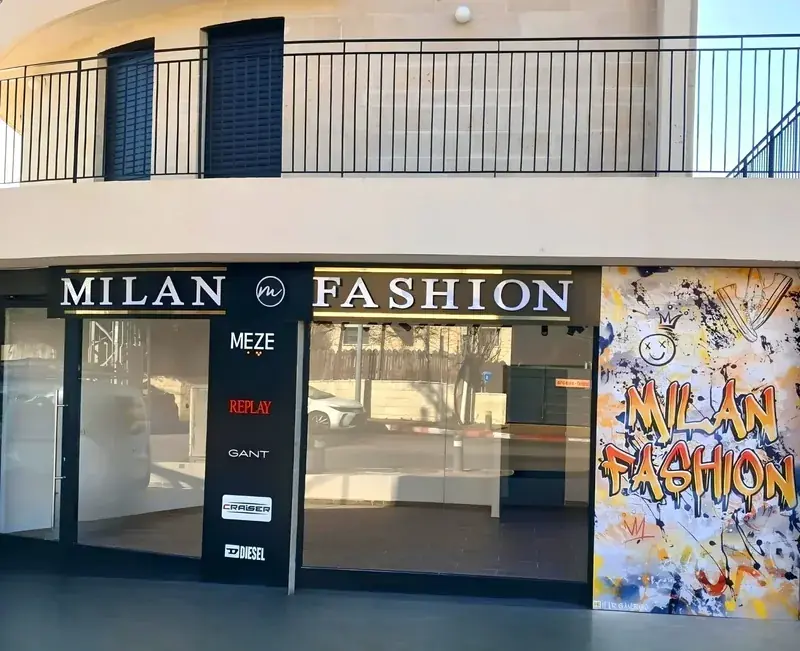
The strip above the door and windows. ACM spans it without bowing, stays flat in the heat, and gives a clean modern face that timber and PVC cannot hold in this climate. This is the most common use.
Backing Panels for Illuminated Letters
Behind a set of channel letters there is nearly always a panel, and it is doing real work: hiding the wiring and the power supplies, giving every letter a solid fixing point, and providing the contrast the lit letters read against. A backing panel that warps takes the whole sign out of alignment with it, which is why this is not the place to save money.
Monument, Wayfinding and Property Signs
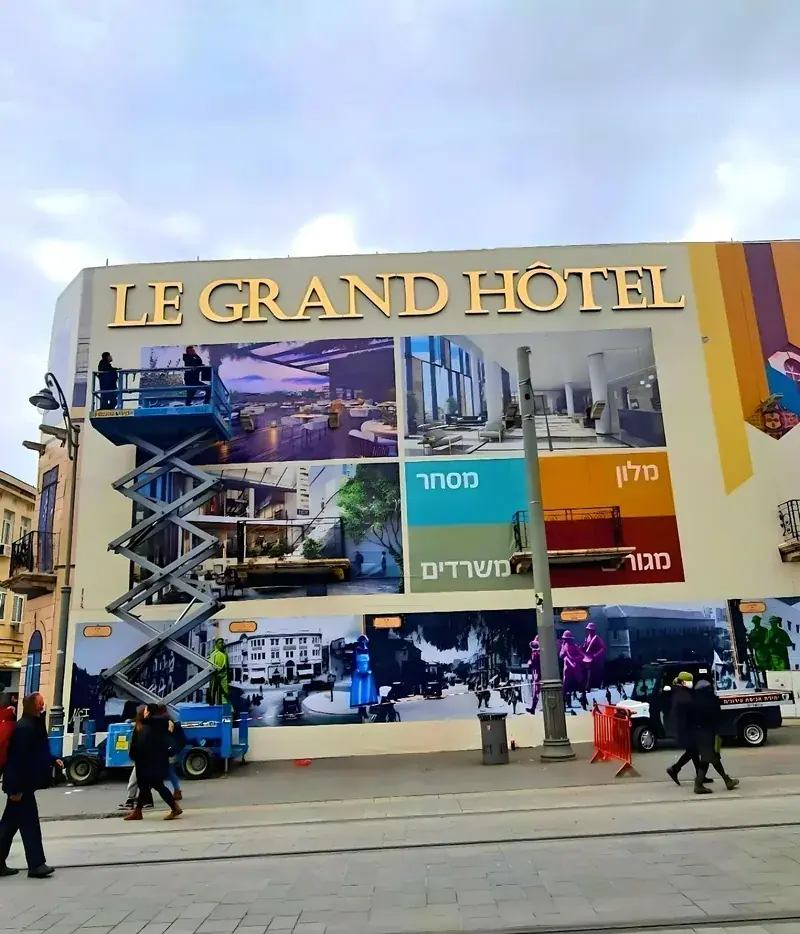
Corporate parks, hotels, condominium entrances, development site plans. These are signs that have to stay legible for years in a place with no shade, and they are usually far from anyone who would notice a problem early.
Routed Letters and Shapes
Because the panel is rigid and stable, it can be cut on a CNC to 0.1 mm precision — letters, logo outlines, decorative screens, shaped panels. A printed sign does not have to be a rectangle, and with a brushed, matte or gloss finish, routed ACM letters give reception areas and lobbies a dimensional look with no illumination at all.
What It Does and Does Not Survive Here
ACM is our top recommendation for coastal projects, and it still wears. Salt air, humidity and intense sun cause fading, colour change and material wear over time even with quality materials. That is natural in a coastal environment and there is no guarantee on a specific lifespan. Across our work, signs run one to seven years depending on the area, the exposure, the materials and whether they were built as permanent or temporary.
Two practical notes that matter more than the panel itself. First, the fixings: on a beachfront installation, untreated hardware will fail long before the panel does, so the ironwork has to be specified alongside it. Second, the edges: a cut edge exposes the core, and while that core is not attacked the way an unprotected plastic sheet would be, a folded or trimmed edge is tidier, stronger and less inviting to water.
What It Costs, and Against What
The price depends on the overall size, the thickness, whether the shape needs CNC routing, and the complexity of the installation. ACM is the most expensive of the printed formats, and the only one that earns it by lasting outdoors. Production on the press runs 24 to 48 hours; scheduling the installation is usually the longer part. Everything carries a six-month warranty, external damage excluded.
Against the alternatives: PVC board printing costs a fraction of it and is excellent indoors and in shade, but in full tropical sun it has two to three years in it before it tires — no coating changes that, because its core is exposed in a way ACM's is not. A vinyl banner costs a fraction of either and is a seasonal object by design. ACM is four times the price of the cheapest option and the right way to read that number is against several years of not replacing anything.
Before You Order
Two things make a quote real: the finished size, and where the panel is going — specifically how exposed it is and how it will be fixed. Send artwork as a vector file or the largest original you have; a logo lifted from a website will not survive being scaled to two metres, and finding that out late is what delays installations.
If you are not yet sure that ACM is the right material rather than board, banner or vinyl, start one level up: the guide to printed signs and their materials walks the decision from the beginning.
If you already know, the ACM panel printing page is where to start the conversation.