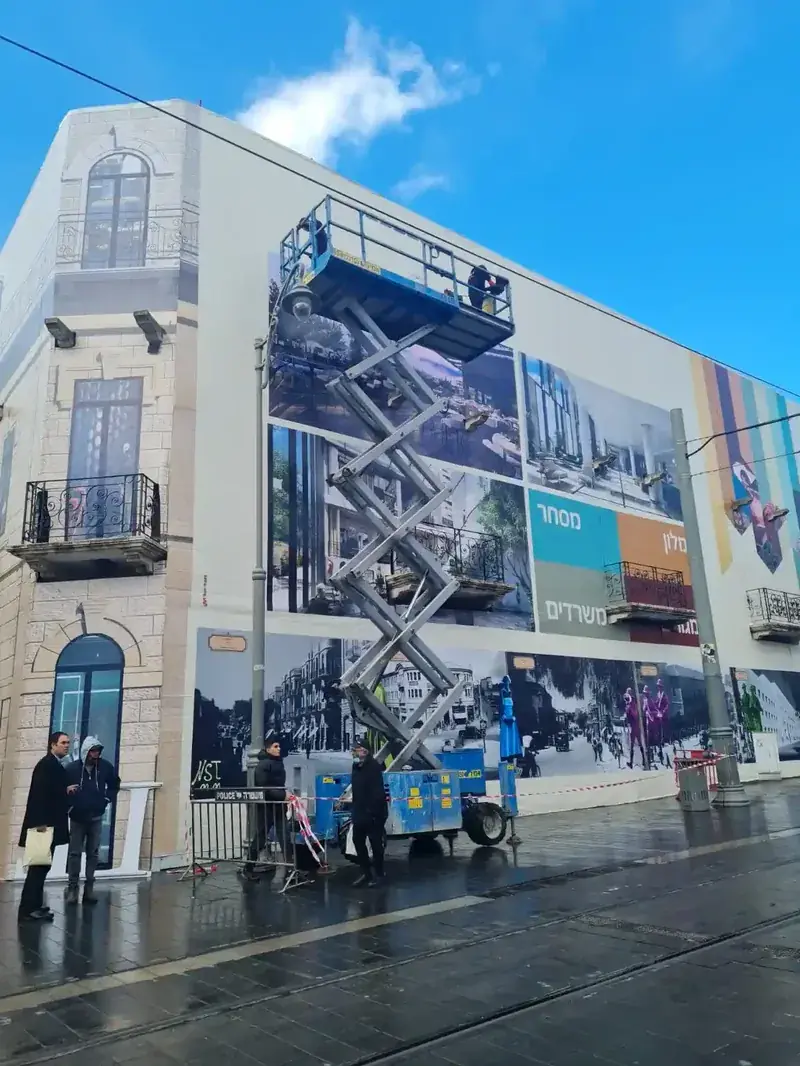
PVC board is the material most people have seen a thousand times without knowing its name. The menu on the wall of a soda. The room numbers down a hotel corridor. The price panel above a bakery counter. The board with a phone number nailed to a fence outside a lot for sale. Almost all of it is rigid PVC, printed and cut to shape.
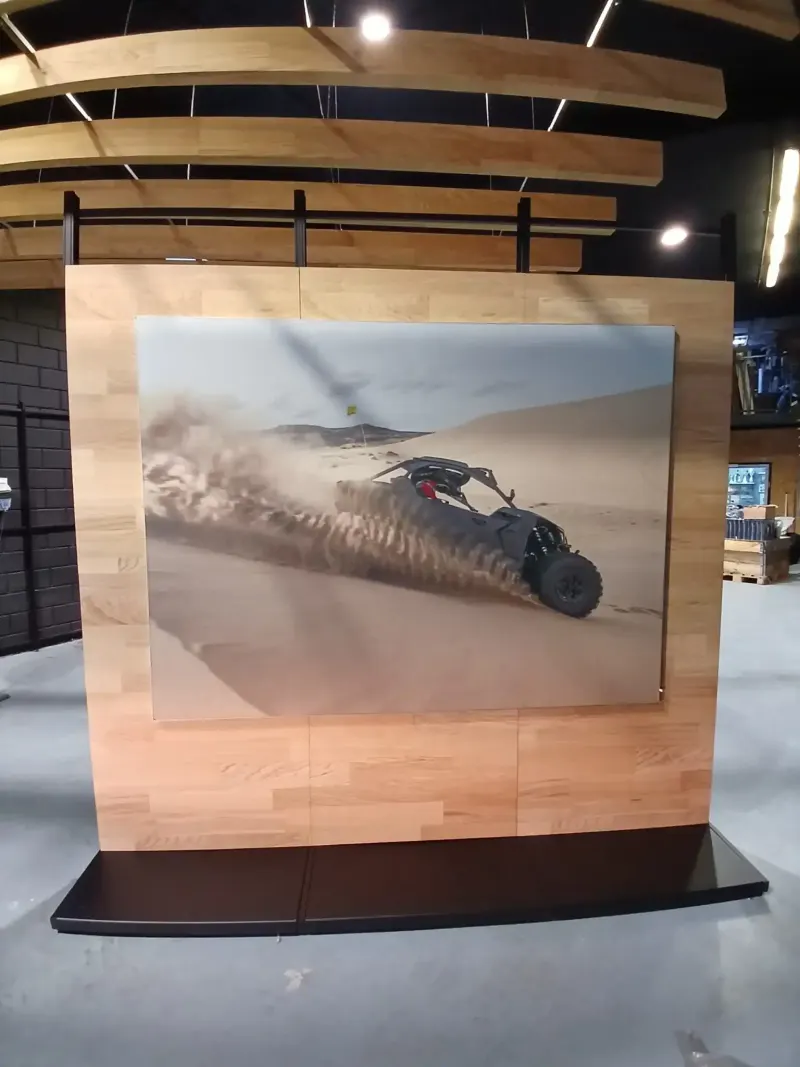

Everyone calls it Sintra, which is a brand name the way Gillette is a brand name. What it actually is: a closed-cell expanded PVC sheet, rigid, very light for its size, dead flat, and with a slightly matte surface that ink loves. Three millimetres is the standard for signage. It cuts cleanly, routes into any outline, takes screws without cracking and does not need a frame to look finished.
Why It Prints So Well
Print quality on PVC board is better than most people expect, and the reason is the surface. It has no weave like a banner, no grain like wood, and no reflective sheen like bare metal — so fine type stays sharp, photographs keep their detail, and flat brand colours come out flat instead of mottled.
We print onto it directly rather than printing vinyl and sticking it down. The ink cures under UV light at the moment it lands, bonding to the board itself, which means there is no film to lift at a corner and no edge for humidity to get under. Our flatbed takes up to three metres by two metres in a single piece, so most panels never need a join at all. The mechanics of that are covered in the guide to UV printing on rigid materials.
The Hard Limit: Direct Sun
Here is the part a print shop should tell you before you order, and often does not.
In full tropical sun, a PVC panel has roughly two to three years in it. After that the surface begins to chalk, the colours flatten, and a large sheet can start to bow between its fixings because the face that gets the sun and the face that does not are no longer expanding at the same rate. No lamination, coating or premium ink changes that arithmetic in any way worth paying for. It is a property of the material, not a quality problem.
What this does not mean is that PVC is an indoor-only material. It means PVC is a material for a known period, and for surfaces that are not baking. A board under a deep roof overhang, on a shaded corridor wall, inside a covered market, on the north face of a building, or behind a glass shopfront will last far longer than the same board on an exposed west-facing wall in Guanacaste — where the afternoon sun is the entire story and two seasons is a realistic expectation, not a pessimistic one.
If the sign has to stay outside indefinitely and look new doing it, the material is aluminium composite, not PVC. The comparison is set out in full in the guide to ACM panels and their thicknesses: aluminium skins keep the sun off the core entirely, which is exactly what PVC cannot do.
Where PVC Board Is the Right Answer
Menus, Price Boards and Anything That Changes
A printed board is cheap enough to reprint. That sounds trivial and it is actually the point: a restaurant that changes its menu twice a year can simply order a new panel each time, which is far better than living with a sign that no longer matches the kitchen. The same logic covers price lists, service boards and seasonal offers.
Interior Wayfinding
Room numbers, floor directories, department signs, arrows in a clinic. Small panels, printed to a house style, screwed or taped flat to a wall. PVC is light enough that a modest panel can be mounted with adhesive tape alone, which matters in a rented space or on a finished wall nobody wants drilled.

Exhibition and Event Graphics
Boards for a trade fair stand, a product launch, a conference backdrop. Rigid, flat, cut to shape, and light enough to carry in one hand — and because they cost little, nobody has to decide whether to keep them afterwards.
Property and Site Boards
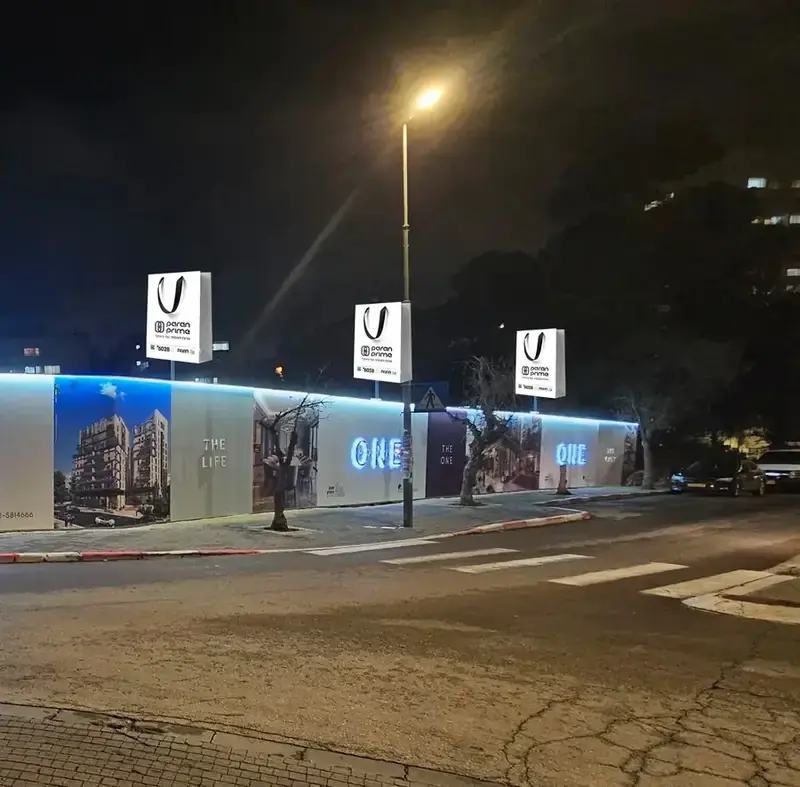
For-sale boards, lot boards, contractor and developer boards on a site fence. These are the classic medium-term outdoor job: up for months rather than years, and replaced when the project moves on. Here PVC's lifespan is not a limitation at all, because the sign's own job ends first. For a hoarding that needs to run the length of a fence, the fabric route is often cheaper still — that comparison is in the guide to printed banners and mesh.
Backing and Build-Up Work
PVC also does quiet jobs inside other signs: a routed layer that lifts a logo off a wall, a spacer, a shaped backing behind lettering. It routes on our CNC to any outline, which is what makes shaped interior signage affordable — a printed sign does not have to be a rectangle.
Thickness, and When to Go Up
Three millimetres covers the overwhelming majority of signage: it is rigid enough for any panel that is supported around its edges or fixed flat to a wall, and it keeps both the weight and the price down.
Go thicker when a panel has to hold itself straight across an unsupported span, when it is going to be handled repeatedly — an event board that travels, a menu that gets carried — or when it will be routed into letters or a shape that leaves thin sections. The honest rule is that thickness is a structural decision, not a quality decision. A thicker board does not print better; it just bends less.
What It Costs and How Fast
The number moves on area, thickness, how much cutting or routing the shape needs, and installation. UV printing on panels runs 24 to 48 hours in production, so a set of interior signs ordered on Monday is normally ready mid-week. Everything carries a six-month warranty, external damage excluded.
Set against the alternatives on the same wall: a vinyl banner costs less but is fabric that must be tensioned, an ACM panel costs several times more and is the permanent outdoor answer, and adhesive vinyl is cheapest of all if the wall itself can be the sign. Which of those a given job wants is the question the guide to printed sign materials walks through end to end.
Ordering Well
Send the finished size in centimetres, say where the panel goes — and in particular whether direct sun reaches it — and send artwork as a vector file or as the largest original you have. Say if the shape is not a rectangle, because that is a routing path rather than a straight cut and it is better priced from the start than added later.
One last piece of advice that saves money more often than any material choice: order the whole set at once. Twelve interior panels printed together cost meaningfully less per panel than four panels ordered three times, because the setup is the same each time. Walk the building, list every sign it needs, and buy them in one run — see the full range on the PVC board printing page.