A banner is the one printed sign almost every business buys at some point, usually in a hurry. A grand opening. A tournament. A unit for sale. A restaurant that changed its hours and needs the street to know by Friday. It is the cheapest line in a marketing budget that actually reaches the street, and it can be in your hands in a day or two.

That speed is also why banners get ordered badly. Nobody asks about hems on a Thursday afternoon. Then the thing tears at a corner in the first strong wind off the Pacific, and the conclusion is that banners do not last — when what actually happened is that a banner was bought without the four decisions that make one last.
The Material: Vinyl or Mesh
Standard banner material is flexible PVC vinyl — solid, opaque, and printed on one side or both. It is what you want for almost everything: it holds colour well, it takes finishing cleanly, and it hangs flat against a wall.
Mesh is the same idea with holes in it. Air passes through instead of pushing against it, which changes everything about how it behaves on an exposed frontage. If a banner is going on a chain-link fence beside a road, across a gap between two buildings, or anywhere the wind has a clear run, mesh is not the upgrade — it is the correct material, and vinyl is the mistake. The trade is a slight loss of colour density, because some of the surface is now air.
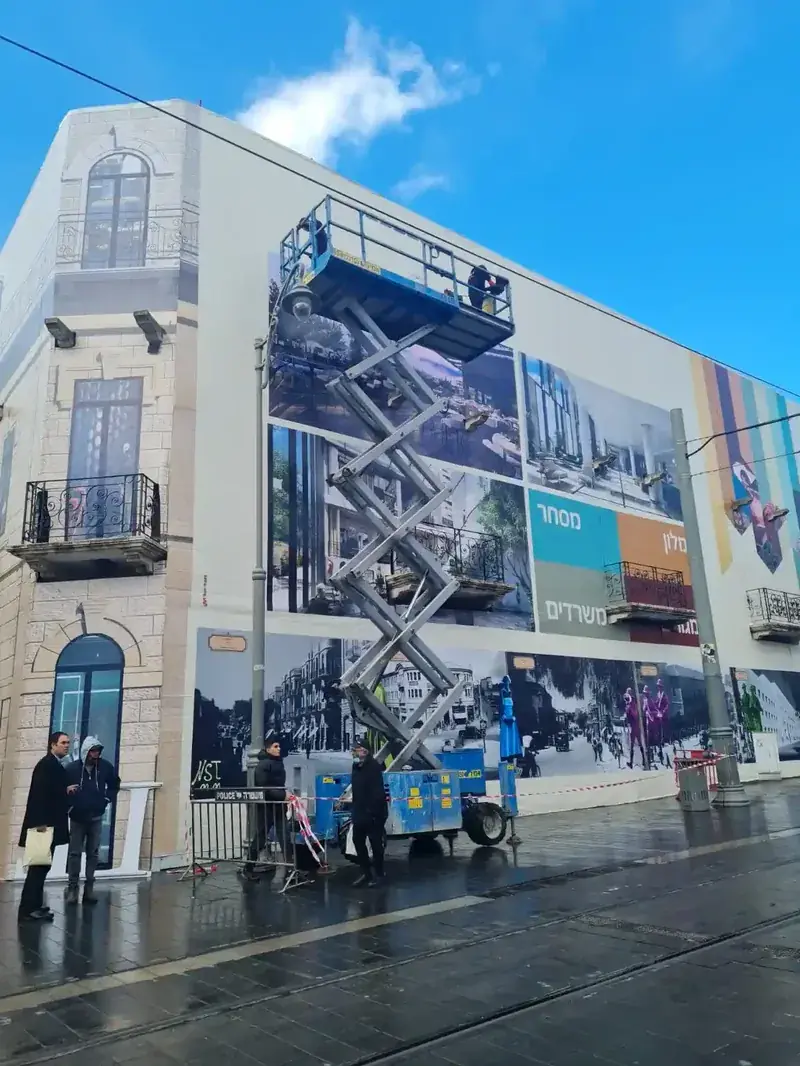
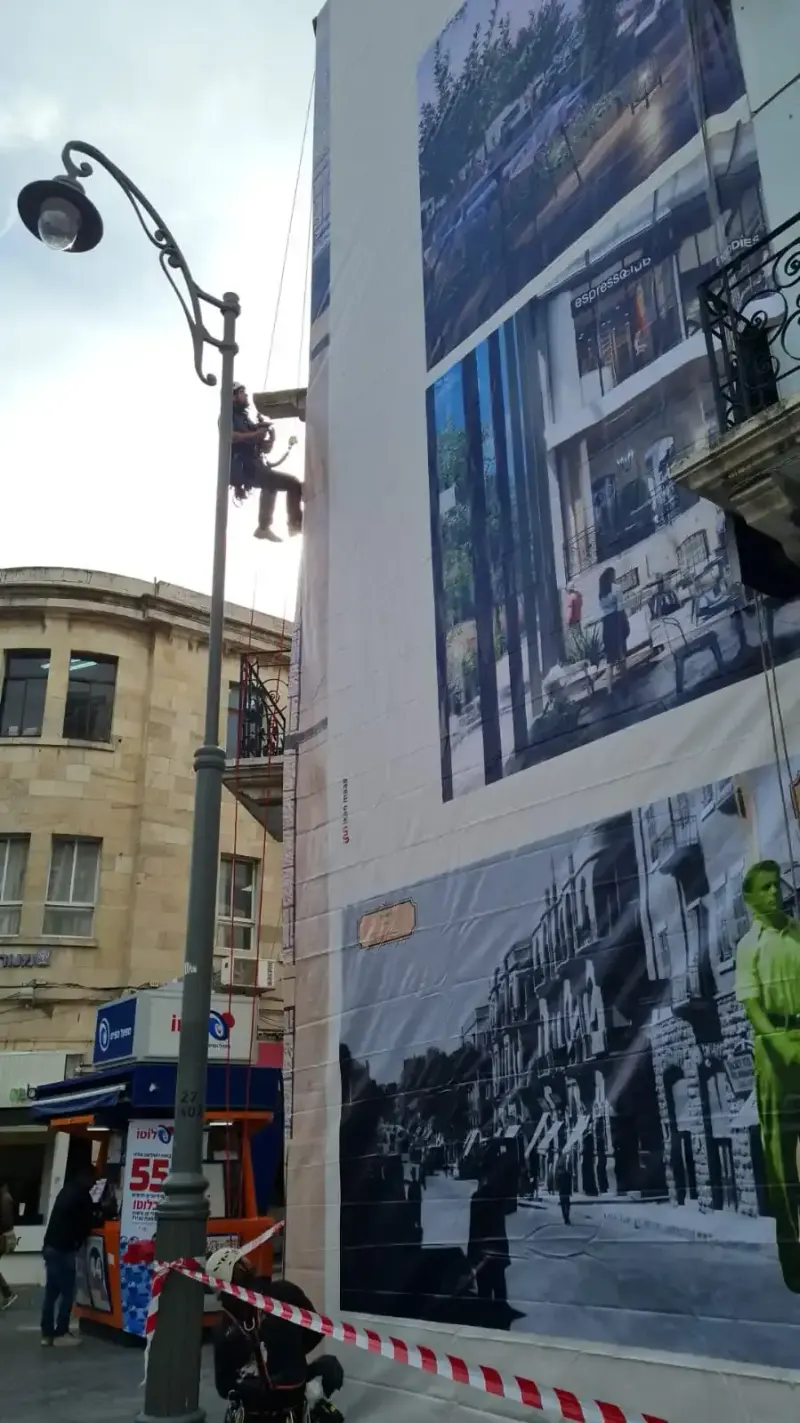
The third case is a building-scale print that is no longer really a banner: a full wrap over a facade under renovation, or a multi-storey graphic. That is a different job with different rigging, and the guide to large format printing covers the seam welding and the access equipment it needs.
The Edges Decide How Long It Lives
Everything that kills a banner happens at its perimeter. The print in the middle is almost never the problem.
Hems
A hem is the banner's own material folded back and welded along each edge, doubling the thickness where the stress is. An unhemmed banner is a sheet with a raw edge, and a raw edge under tension is a tear waiting for a gust. Hem every banner that goes outdoors. It is the cheapest line on the quote and the one that decides whether you buy a second banner in March.
Grommets
Grommets are the metal eyelets you tie through. Two things matter: that they sit in the hem rather than in single-thickness material, and that there are enough of them. Spacing them widely to save a few colones concentrates all the load on four points, and those four points are where it will fail. On a wide banner, closer spacing along the top and bottom edges is what keeps it flat instead of bellied.
Pole Pockets
A pole pocket is a sleeve sewn or welded along the top and bottom so a pipe can slide through. It spreads the load along the whole edge instead of through eyelets, and it is the right finish for banners hung between two poles or weighted at the bottom. It also stops the flapping that slowly saws a banner apart against a wall.
Wind Slits — and Why We Usually Say No
Half-moon cuts in a vinyl banner are a common field fix meant to let wind through. They do let some through. They also start a tear at every cut, and in a place with real wind they age a banner faster than they save it. If wind is the problem, the answer is mesh, better fixing points, or a smaller banner — not holes in a good one.
Roll-Ups: the Banner That Travels
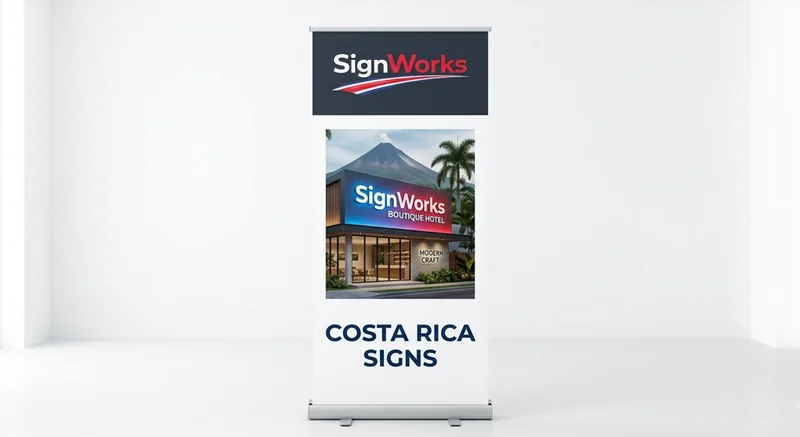
A roll-up is a printed banner attached to a spring-loaded cassette. Pull it up, lock the pole, and you have a free-standing sign about two metres tall; wind it back and it is a tube you carry under one arm. It costs more than a plain banner of the same size, and the stand is the reason.
They are indoor equipment, and it is worth being blunt about that. A roll-up in an open-sided beach restaurant or on a terrace will move, and a roll-up that falls over lands on its printed face. Where they earn their money is trade fairs, hotel lobbies, reception areas, clinic waiting rooms, conference tables and pop-up stands — anywhere you need presence today and the wall is not yours to drill. Businesses that exhibit regularly usually end up with two: one with the permanent brand message, one that gets reprinted for each event while the base is reused. The roll-up banner page has the formats we stock.
Sizing: Read Distance Before Anything Else
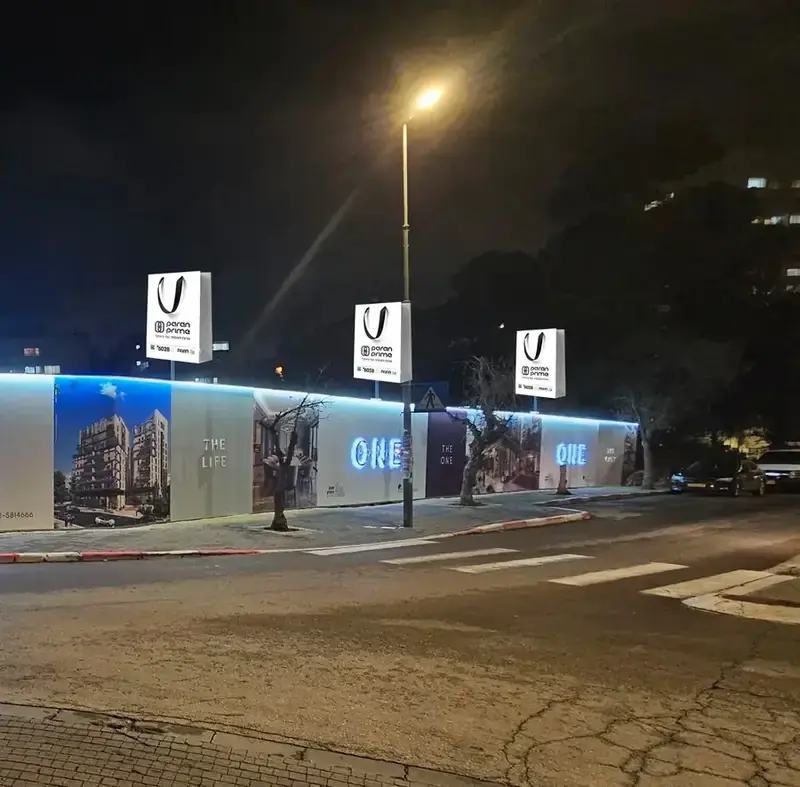
The most common error is not material, it is size — specifically, a banner bought to fit a wall rather than to be read from where people actually stand. A banner across the front of a building is read from the opposite sidewalk or from a car; a banner beside a registration desk is read from two metres away. Those two need very different letter heights, and letter height is what drives how much space the message can occupy.
Which leads to the second most common error: too many words. A banner is not a page. One line people can read at speed, one supporting line, and one way to reach you. Everything else you were going to add is a reason to make the main line smaller, and a banner nobody can read at distance is a banner that did not work no matter how good the print is.
What a Banner Really Survives Here
A vinyl banner is a seasonal object, and that is not a flaw. It is the cheapest square metre of message there is, and the price reflects the lifespan. What shortens it in Guanacaste is rarely sun alone.
It is the green season that does the real damage: rain that soaks a banner already loaded by wind, day after day, working every fixing point. And it is the fact that nobody takes the thing down. A banner that comes off its frame after a two-week promotion is still in usable condition for the next one; the identical banner left up for nine months has been flexed several hundred thousand times and belongs in the bin. If a message needs to be up permanently, it should not be a banner — that is what a rigid panel is for, and the comparison of rigid PVC board printing sets out where the line falls.
Salt matters at the fixings more than at the fabric. On a beachfront installation, the banner will usually outlive the zip ties and the untreated hardware holding it, so the ironwork is worth specifying alongside the print.
How Fast, and What It Costs
Banners print fast: one is ordinarily ready inside 24 to 48 hours, and a straightforward job can be the same day if the artwork is clean. A roll-up costs more than a plain banner of the same size, because it arrives with its own stand. The price moves on size, on single versus double-sided, on mesh versus solid vinyl, and on finishing — hems and grommets included, pole pockets a little more.
Install is its own line. At ground level, on a wall or a fence, most businesses hang their own. Above about four metres, or across a street frontage, it is a job for a lift and people who do it regularly — and a banner that sags in the middle or is tensioned unevenly reads as cheap no matter what it cost.
What to Send Us
Three things move fastest: the finished size in metres, where it is going and for how long, and the artwork as a vector file or the largest original you have. From those three the rest is mechanical — we will tell you vinyl or mesh, how many grommets, and whether it should be a banner at all.
That last answer is not always yes. Plenty of the banner enquiries we get are really panel jobs that somebody priced as a banner because a banner is cheaper this week. Whether that swap is worth making is exactly the question the wider guide to printed signs and their materials is built to answer.
For anything that has to stand up to sun, salt and a full year of weather, buy the panel. For a season, a match, an opening or a sale — buy the printed vinyl banner, hem it properly, and take it down when it is done.