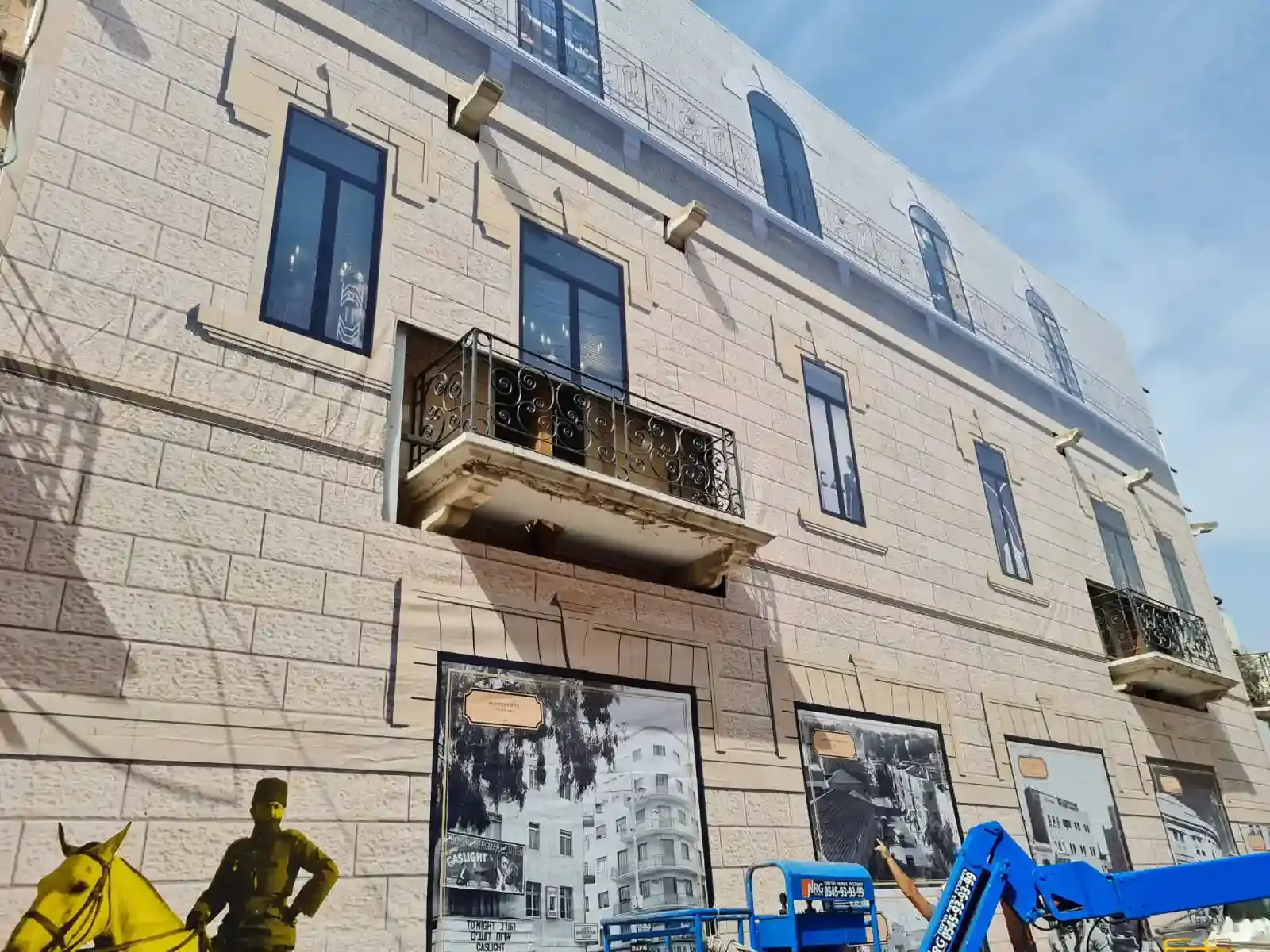
Tamarindo is a hard town to keep anything stuck to anything. Salt comes off the water and settles on every surface facing it. For half the year it rains hard in the afternoon and everything is damp until morning. And the whole town runs on a season, which means the sign you need has to be ready this week, not next month.
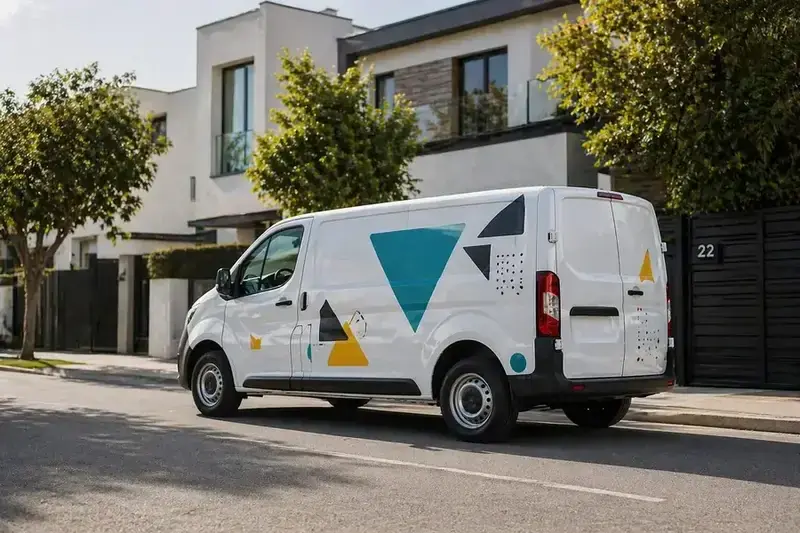
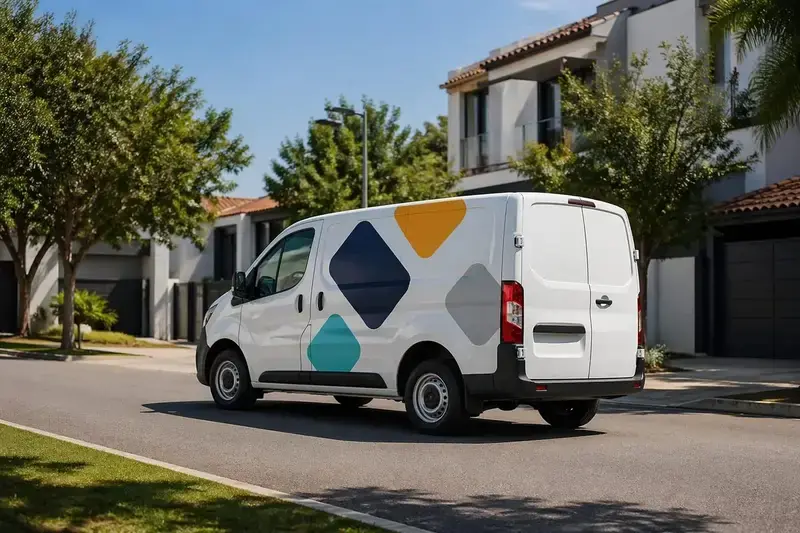
Adhesive vinyl handles all four of those better than almost anything else, as long as it is the right vinyl.
Why Vinyl Is the Right Tool Here Specifically
Most of what a Tamarindo business needs to brand already exists and belongs to someone: a rented shopfront window, a leased van, an interior wall in a building you cannot drill, a cooler, a surfboard rack, a menu stand. Vinyl does not need its own panel. It borrows the surface that is already there, which makes it both the cheapest and the least permanent option — and in a town where leases turn over and concepts change, the least permanent is frequently the point.
It is also the fastest thing we make. Stickers and vinyl are ready in 24 hours. When a restaurant changes its hours three days before high season starts, that number matters more than any material specification.
The Material: Cast Vinyl and a Laminate, Not the Cheap Roll
There are two grades of printed vinyl in circulation and the difference does not show on day one. It shows in March.
Cheap calendered film is stiff, it wants to shrink back to its original shape, and on a curve it slowly loses that argument — the corners lift, dirt gets under the edge, and within a season the graphic has a grey outline. Cast vinyl is made differently: it is thin, it conforms, and it has no memory pulling it back. On a flat window it matters less. On a van door, a cooler lid, a curved column or a rounded sign face, it is the whole job.
Over the print goes a protective laminate. That layer takes the UV hit, the sand, the pressure washer at the car wash and the hands of everyone who touches a doorframe on their way in.
What Salt Actually Does
Salt air destroys unsuitable materials within a few months — that is why every sign we build for this town gets anti-corrosion treatment and fully waterproofed connections as standard rather than as an upgrade.
For vinyl, the attack is at the edges. Salt crystallises in the tiny gap at the perimeter of a graphic, then humidity works into it, and the bond gives up from the outside in. Which is why installation quality matters more here than the print does: a well-rolled edge on a properly cleaned surface will still be down next season, and a rushed one will not. It is also why we tell people to rinse vehicle graphics and exterior window vinyl with fresh water now and then. It roughly doubles the useful life of the graphic for the price of a hose.
Nobody should promise you a specific lifespan on the coast. Salt, humidity and intense sun cause fading and material wear over time even with quality materials, and that is natural this close to the water. Across our work, signs run between one and seven years depending on exposure, materials, and whether the sign was built as permanent or temporary.
The Jobs Vinyl Is Genuinely Best At Here
Vehicles
A tour operator's van, a rental fleet, a delivery truck, a shuttle. In a town this compact a wrapped vehicle is seen by the same people several times a day, and it parks in front of a different hotel every morning. Partial branding (logo, one service line, one phone number, high contrast) is usually a better buy than a full wrap, because it costs a fraction and gets read in traffic, which a busy full wrap often does not. The full treatment is in the guide to vehicle wraps and fleet branding.
Windows
Hours, a logo, a menu, a promotion. Applied inside the glass where it is protected from sand and hands, exterior-facing vinyl lasts substantially longer. If the window also needs shade or privacy without going dark inside, that is a different film — microperforado — and it is worth asking for by name.

Labels and Contour-Cut Stickers
Bottles, jars, coffee bags, soap, board wax, anything a visitor takes home. This is the one product on the list that travels: a sticker on a water bottle is seen in another country by people who have never heard of the business. Contour-cut work costs more than a straight rectangle, and the detail of it is covered in the guide to contour-cut sticker printing.
Interior Walls
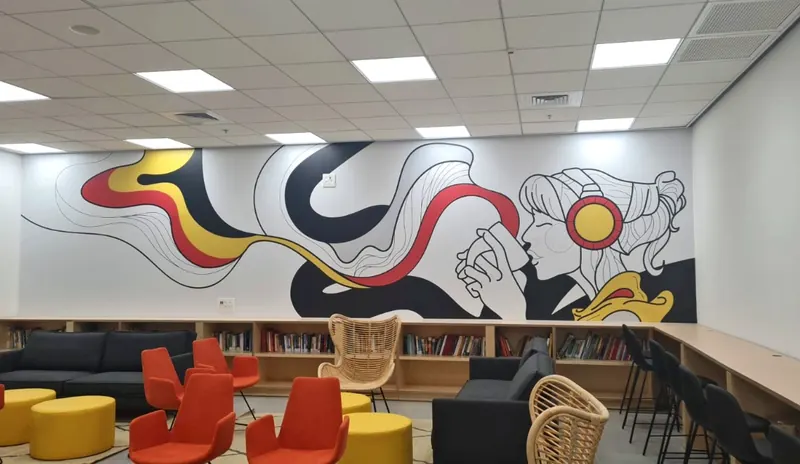
A printed wall graphic is the cheapest square metre of finish in a building. For restaurants and bars it does a second job: it gives customers a reason to take a photograph, and a photographed wall is advertising nobody paid for twice. It also comes off when the lease ends, which a painted mural does not.
Where Vinyl Is the Wrong Answer
Vinyl cannot fix a rough surface. Unrendered block, flaking paint, rough timber, a rusted shutter — the graphic will follow every flaw and then peel off it. On those, print a panel and mount it.
It is also the wrong material for a permanent exterior identity sign. A fascia above a door in full sun and salt wants aluminium composite, not film on a wall. Which material a given job wants is what the guide to printed signs and their materials sorts out.
Prices and Time
Contour-cut work costs more than a straight rectangle, because the cutter has to follow the shape. The price moves with area, quantity, the grade of film and the laminate. Everything carries a six-month warranty, external damage excluded.
Production is 24 hours for most sticker and vinyl work. Installation is scheduled separately, and in high season it is worth asking early — the week before Christmas is not the week to discover that everyone in town wants their windows done. Standard sign orders for Tamarindo run 7 to 14 business days in total; vinyl is the part of the catalogue that beats that comfortably.
Price Your Own Sign
answers in secondsNo two signs cost the same — size, material, finishing and installation each move the number. Tell Worky what you need and it prices your sign, not an average.
Worky is an AI. Answers may contain errors — always verify with us.
Ordering It Well
Send the finished size in centimetres, a photograph of the surface it is going on, and the artwork as a vector file or the largest original you have. The photograph is the part people skip and the part that changes our answer most often — a wall that looks smooth in a description is frequently not.
We install across the province and the same materials behave differently twenty kilometres inland, where there is sun but no salt.
If the job is in Santa Cruz, Liberia or anywhere off the coast, the notes on sticker printing across Guanacaste cover that difference.
And if it is here in town, on the water, start from the stickers and vinyl page and tell us where it goes.