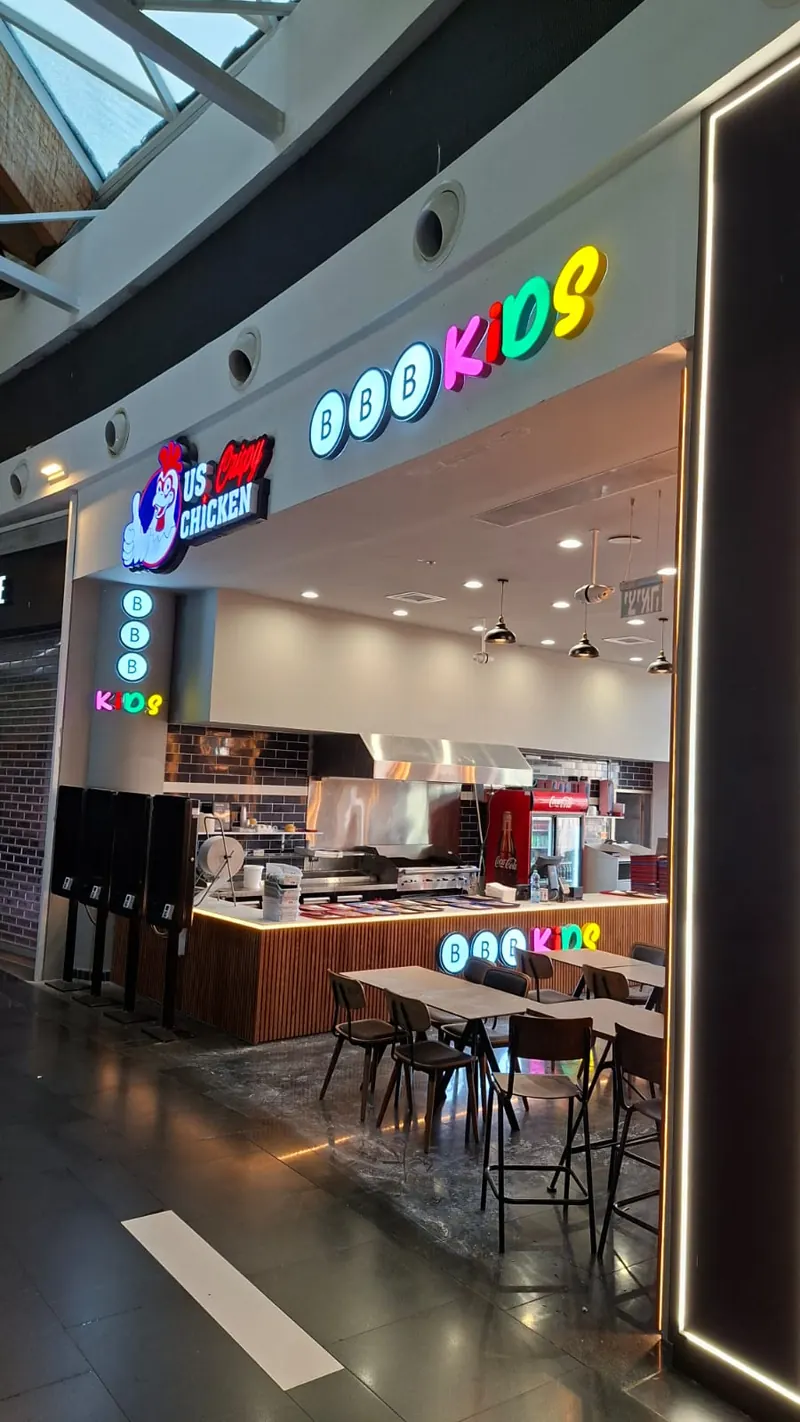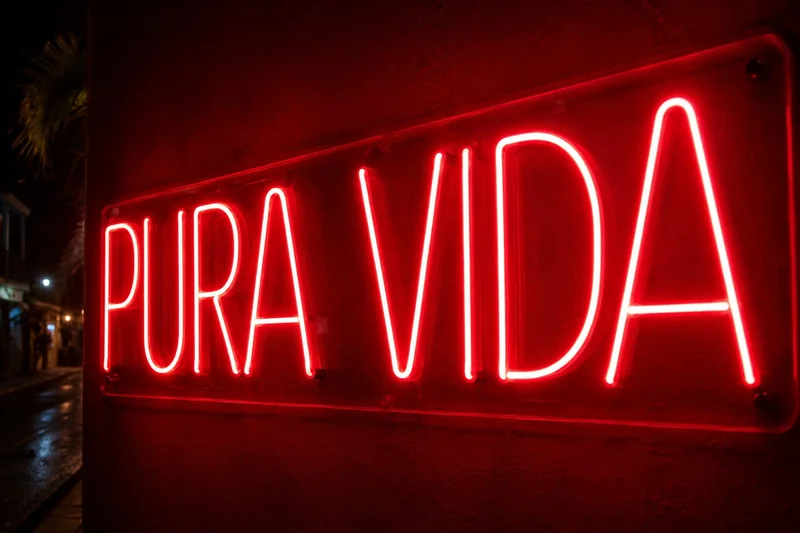
Walk down any row of shops and look at where your eyes go. The signs flat on the facades only show themselves when you are almost in front of the door. The one that catches you from half a block away is the sign sticking out into the street.
That is a flag sign. Its face is at a right angle to the street, so it is turned toward the people coming along it instead of toward the far sidewalk.
What Is a Flag Sign?
A flag sign, also called a projecting or blade sign, is mounted perpendicular to the facade. It can hang from a bracket on the wall or stand on its own pole near the entrance. Most are built as a lightbox: a cabinet with LED modules inside and a translucent face, so it works after dark as well as in daylight.
Because both faces point along the street, a flag sign is usually double-sided, with the same graphic on each side. A driver coming from the north and a pedestrian coming from the south read the same name.
When a Flag Sign Beats a Flat Sign
A flat sign is still the right choice when customers arrive head-on: a plaza, a parking lot in front of the shop, a building entrance. A flag sign wins when people move along the street rather than toward the shop. Narrow streets, busy sidewalks and rows of storefronts where every facade competes for the same glance are where it earns its place.
It also helps a small business with a small facade. The sign does not need to be large to be noticed, because it faces the way people are already looking.
From the 3D Model to the Street
The video below follows one of our flag signs, a tall vertical lightbox. It starts as a 3D model, where the cabinet, the folds of the metal, the hanging points and the face get worked out, and ends on a pole beside a shop door, lit at dusk.
Bracket or Pole
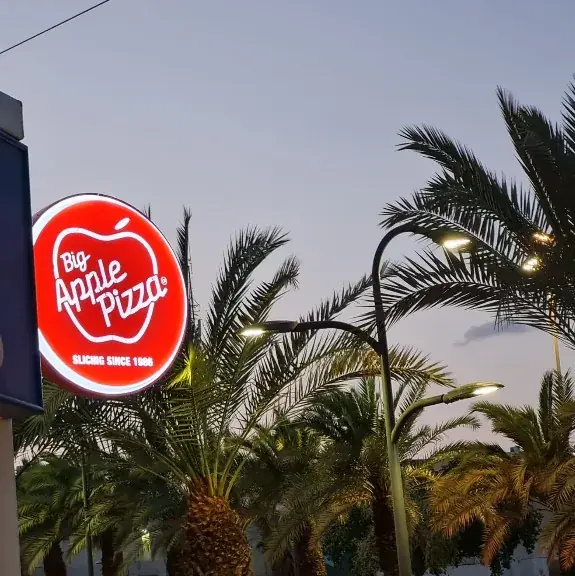
On a solid facade, a bracket is the common choice: the sign projects from the wall at the height where people look. The flag sign we made for a pizzeria is mounted this way, a round double-sided face in the brand's red with a cut plexiglass logo.
A pole works when the facade is set back, covered in glass, or simply cannot take the load, or when the sign needs to stand closer to the street than the building does. Either way, we build outdoor flag signs for wind, rain and Guanacaste's tropical climate.
Planning a Flag Sign
Before asking for a quote, stand on the sidewalk and look both ways: where do your customers come from, and from how far should they see you? Note whether the facade is masonry, wood or glass, where the nearest power is, and whether the location allows a sign to project over the sidewalk.
Send us a photo of the facade by day and at night with those notes. We will tell you whether a bracket or a pole fits, what size reads from the distance you need, and whether one face or two makes sense for that street.